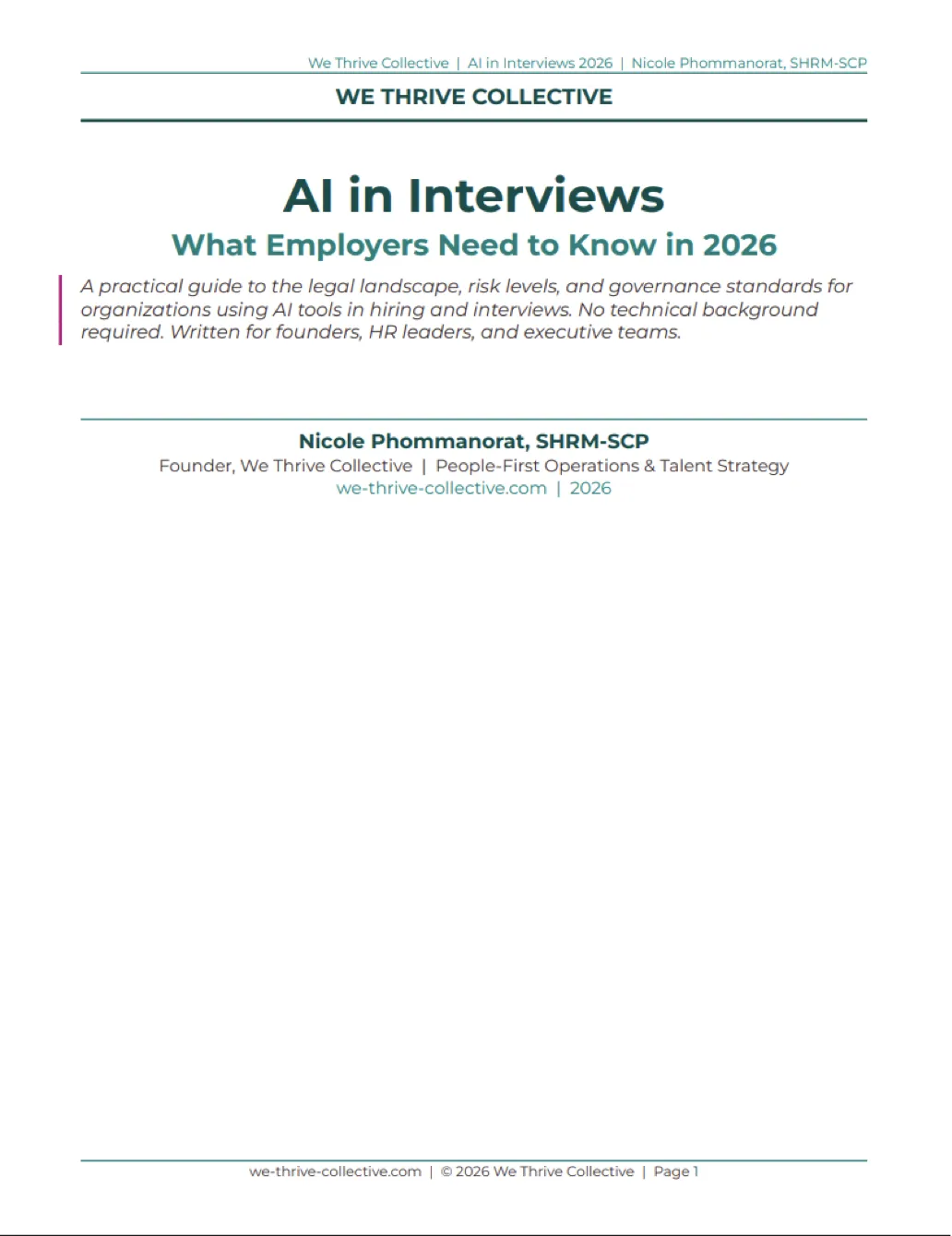
AI in Interviews:
What Employers Need to Know in 2026
A practical guide to the legal landscape, risk levels, and governance standards for organizations using AI tools in hiring and interviews. No technical background required. Written for founders, HR leaders, and executive teams.
If you record interviews, use a transcription app, or paste candidate notes into ChatGPT, there are laws that apply to your organization right now.
Several states have passed specific requirements around AI in hiring. Those laws apply based on where your candidates are located, not just where your company is based. The gap between what most organizations are doing and what the law requires is real, and it's growing.
This 27-page guide covers:
What the law actually requires — state-by-state breakdown of AI hiring laws in effect as of April 2026, including Illinois, California, New York City, Colorado, Texas, and Maryland
Where the legal risk concentrates — discrimination, consent failures, and data mishandling explained in plain language
A risk spectrum for common tools — from scheduling bots to AI scoring systems, with a clear risk rating and recommended posture for each
A six-question self-assessment — answer yes or no to find out exactly which parts of the guide apply to your organization
A prioritized action list — what to do this week, this quarter, and ongoing to close the biggest gaps first
Who owns what — a responsibility framework so compliance doesn't stall because nobody was assigned to it
This guide isn't legal advice. It's the information you need to have the right conversations with the right people before a problem becomes a claim.
Get the guide. It's free.
Written by Nicole Phommanorat, SHRM-SCP
Founder of We Thrive Collective. 15+ years in people operations, business systems, and ethical tech. Nicole has led staffing for 200+ store openings, reduced time-to-apply by 88%, and built AI governance frameworks for growing organizations.
This guide is not legal advice. It's the information you need to ask better questions, spot real risk, and take action before a problem becomes a claim.
Questions about your specific situation? Work with Nicole →